
Fraunhofer Center Erfurt

Interdisciplinary Research for Future Markets


As a hub for collaborative research, the Fraunhofer Center Erfurt (FZE) brings together the expertise of the Fraunhofer Institutes for Photonic Microsystems (IPMS), for Applied Optics and Precision Mechanics (IOF), and for Cell Therapy and Immunology (IZI).
Together, we develop customer- and application-specific solutions for future markets such as healthcare, analytics, security, and communications, combining optical, microelectronic, and cell-based technologies into integrated systems for research and application.

 Hands are holding a square quantum source that is silver in color. Red laser beams can be seen emanating from it
© Fraunhofer IOF
Source for highly secure quantum communication.
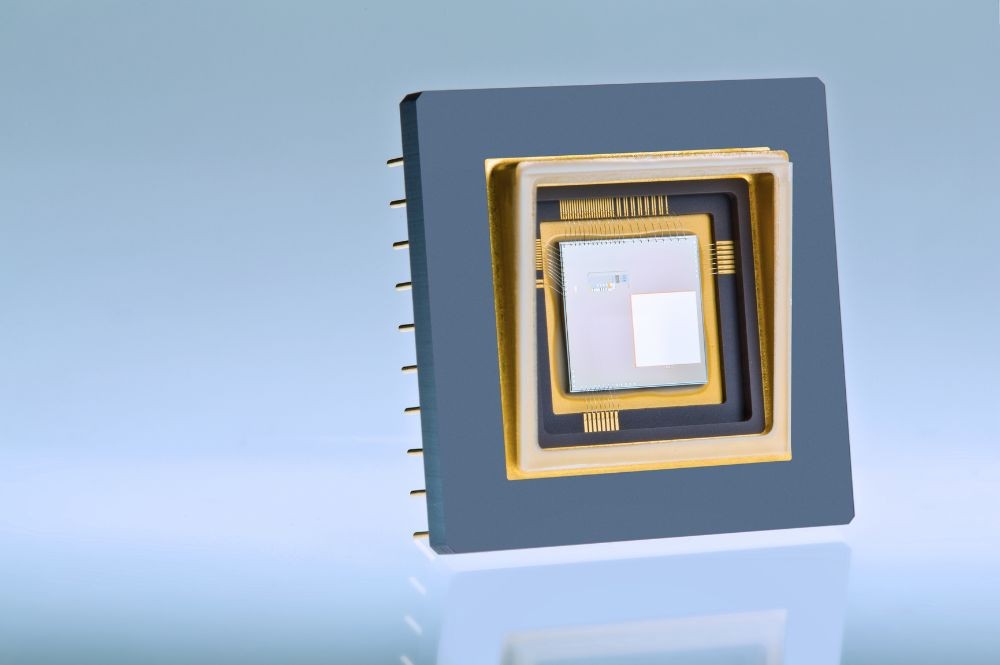
A square chip with multiple layers.
© Fraunhofer IPMS
Micromechanical area light modulator for structured illumination in microscopy.
Hands are holding multiple glasses containing a differently coloured liquids in front of a white device with a small display.
© Fraunhofer IZI
Analysis of volatile metabolic fingerprints using GC-IMS.

Event Highlights


"Long Night of Science at the FZE"

On November 6, science enthusiasts will have the opportunity to experience research firsthand. We look forward to seeing you there!


Research Areas

Microphotonics


Microphotonics uses light wavelengths in the micrometer range to image biological structures in a non-invasive manner. Applications range from high-resolution imaging techniques and spectral analyses to optical sensors for biomaterials. It enables precise, non-invasive measurements in research, diagnostics, and materials science by describing and quantifying light interactions with cells, tissues, and surfaces in detail.

Quantum Optics & Communication


Quantum Optics utilizes the physical phenomena superposition and entanglement of single light particles to create new applications ranging from secure key distribution (QKD), high-precision sensing, metrology, and quantum-compliant communication networks. These technologies enable robust, error-resistant information transmission, new security concepts, and measurement accuracy beyond classical limits. In research, industry, and infrastructure, this opens up new possibilities for data integrity, synchronization, and high-performance networks.

Cell & Biomaterial Analysis


Cell and biomaterial analysis combines microscopic imaging, molecular profiling, and material characterization to understand cell states, interactions, and surface reactions. Applications range from cell-based assays and biomaterial design to tissue engineering and therapeutic research. These methods provide quantitative insights into cell density, morphology, signaling pathways, and material properties, increasing reproducibility in research and industry, and supporting diagnostics, drug development, and regenerative medicine.

Optical System Engineering


Optical system engineering deals with the design, integration, and optimization of complex optical systems, focusing on trajectories, beam guidance, sensor interfaces, and system-level verification. Typical approaches include the integration of optics into sensor modules, the system integration of mechanics, electronics, and optics, as well as wafer-level packaging and the fine-tuning of imaging and measurement paths. Applications range from practical sensor technology and medical imaging to industrial measurement and testing systems.

Microelectronics


Microelectronics encompasses the development of small, high-performance components and circuits. The focus is on semiconductor technologies, packaging, and system integration to enable efficient, cost-effective electronics for the automotive sector, Industry 4.0, and consumer goods. In addition, advanced manufacturing processes, quality assurance, reliability testing, and new architectures for sensor technology, computing power, and energy efficiency are being advanced. Applications range from microprocessors to specialized system-on-chip solutions.

Biophotonics & Medical Technology


Biophotonics combines optics, biology, and medicine to visualize biological processes and support clinical applications. Typical fields include diagnostic imaging, laser-assisted therapies, optical sensing, and real-time tissue monitoring. The goal is non-invasive, precise diagnostics and therapeutic innovations with reliable, reproducible results for research, patient care, and personalized medicine. New instruments, platforms, and data analyses accelerate translational progress from the laboratory to the clinic.

Collaboration with Partner Institutions

Fraunhofer Institute for Applied Optics and Precision Engineering IOF

A person in a lab coat is standing in front of a machine and working at some computer screens.
© Fraunhofer IOF
System for the micro-assembly of optical components and their integration into photonic integrated circuits.
  • Research and development of photonic quantum technologies:
    The Fraunhofer Center Erfurt (FZE) is emerging as the central hub for quantum communication in Germany. Through various activities and projects, we are working with our project partners to expand the existing quantum communication infrastructure from the FZE to the Fraunhofer IOF in Jena and on to Berlin and Frankfurt.
  • Assembly and Interconnection Technology for Photonics:
    We offer innovative solutions for the high-precision integration of photonic systems. These include assembly technologies such as handling, alignment, and joining. Our expertise in joining technologies ranges from adhesive bonding and laser brazing to CO2 laser welding.

Fraunhofer Institute for Cell Therapy and Immunology IZI

  • Cell culture and tumor microenvironment:
    We establish 2D/3D models under hypoxic to normoxic conditions and monitor drug testing with real-time analytics—to ensure robust, comparable results.
  • Cell and Tissue Analysis:
    From gentle tissue dissociation to flow cytometry, staining/microscopy, and ELISA, all the way through to cryopreservation – we provide reliable data from sample to report.
  • Phenotyping & Metabolic Fingerprints:
    Label-free, high-throughput screening of cell mechanics and morphology (RT-DC) as well as GC-IMS VOC profiles—for biomarker discovery, treatment monitoring, and quality control.
  • Microfluidics & Biofunctionalization:
    3D printing of microfluidic chips, plasma activation, and biomolecular conjugations (e.g., antibodies, DNA, proteins) – for customized assays and biosensors.
A person is working in a cleanroom and holding various objects in their hand.
© Fraunhofer IZI
Modern laboratory analytics for innovative solutions in biomedicine

Fraunhofer Institute for Photonic Microsystems IPMS

A person is sitting in front of a screen and holding a controller in their hand. They are pointing at the screen, which shows a hilly gray landscape.
© Fraunhofer IPMS
High-resolution confocal MEMS-based laser scanning microscope for use in tumor diagnostics
  • Integrated Biophotonics:
    Development of silicon nitride–based photonic integrated circuits (PICs) on 200 mm wafers (Dresden site). At FZE, the focus is on PIC-based sensing for biomolecular analysis.
  • MEMS and optical MEMS (MOEMS):
    Development of silicon-based MEMS and MOEMS sensors and actuators on 200 mm wafers (Dresden site). At FZE, the focus is on their integration into photonic systems and biomedical applications.
  • Microelectronics for Sensor Systems:
    Development of microelectronic components for the control of sensor and actuator systems on 200 mm and 300 mm wafers (Dresden site) as basis for integrated sensor systems.

Collaboration and Contact

Are you planning projects in the fields of microphotonics, quantum communication, cell and biomaterial analysis, biophotonics, medical technology, or microelectronics?

The Fraunhofer Center Erfurt supports you in developing and implementing your applications – from initial concept to near-market systems. Please feel free to contact us for further information.